

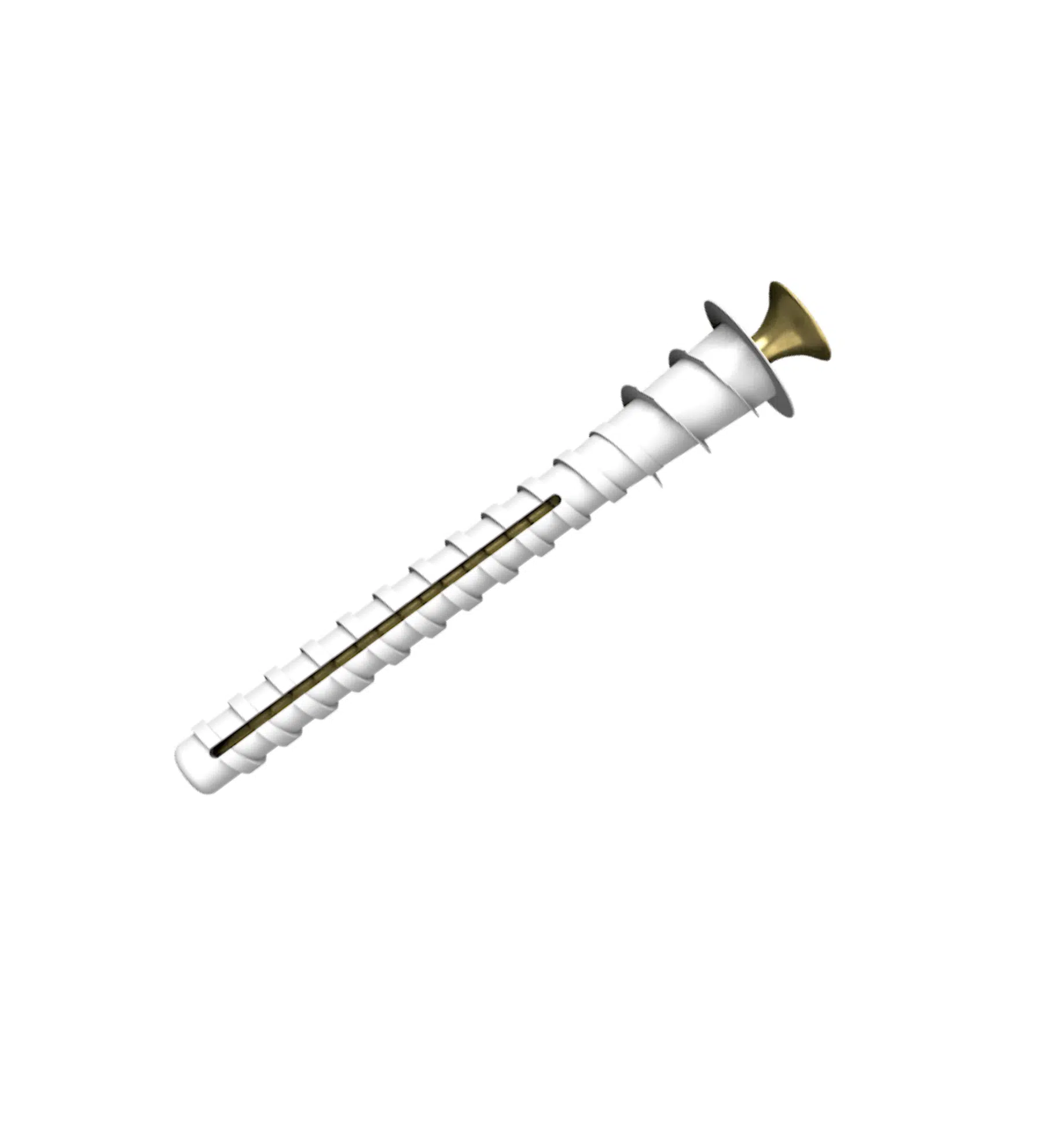


Deilaleigh Rigifix-lite Dot and Dab Plasterboard Fixings | Heavy-Duty Fixings for Drylined Walls
- Genuinely heavy-duty – transfers the load back into the solid wall behind the plasterboard, not the board alone.
- Ideal for dot & dab walls – purpose-made for cavity-backed plasterboard where standard plugs and plasterboard fixings are not suitable.
- Secure, flush finish – sleeve and fixing sit neatly through the board, ready to mount brackets, frames and rails.
- Versatile applications – suitable for TVs, radiators, boilers, basins, wall cabinets and heavy shelving (within load data).
- Simple installation – straightforward drill, insert and tighten method with minimal special tools.
Free shipping on orders over £60
- No-Risk Money Back Guarantee!
- No Hassle Refunds
- Secure Payments
Deilaleigh Rigifix-lite Dot and Dab Plasterboard Fixings – Heavy-Duty Fixings for Drylined Walls
Deilaleigh Rigifix-lite Dot and Dab Plasterboard Fixings are specialist heavy-duty fixings designed for securing significant loads to dot and dab plasterboard walls and other drylined constructions. By anchoring directly into the solid masonry behind the board while bridging the cavity, they provide a safe, structural fixing for items such as TVs, radiators, boilers, cabinets and sanitaryware.
Deilaleigh Rigifix-lite Dot and Dab Plasterboard Fixings solve one of the most common site problems: how to safely fix heavy items to drylined “dot & dab” walls where there is a gap between the plasterboard and underlying masonry. Standard plasterboard fixings rely on the board only, which is not suitable for radiators, TVs, boilers, large cupboards and other high-load fixtures.
Rigifix-lite fixings are designed as a through-fixing system. A correctly sized hole is drilled through the plasterboard and adhesive into the solid masonry behind. A special sleeve/anchor assembly is inserted through the board, bridging the cavity, and then a high-strength screw or stud is driven into the masonry anchor. The result is a rigid, high-load fixing point that bears primarily on the underlying wall, not the plasterboard.
The sleeve diameter and length are chosen to match common dot & dab cavity depths and plasterboard thicknesses, ensuring a snug fit and good alignment. Once installed, the front of the sleeve provides a solid bearing surface for fixture brackets such as TV mounting plates, radiator brackets, boiler hanging frames, sanitaryware frames and heavy shelving systems.
These fixings are widely used by plumbers, heating engineers, electricians, kitchen & bathroom fitters, carpenters and general builders on new-build and refurbishment projects where dot & dab is common. They are particularly useful anywhere local studs or timber pattresses are not present or accessible.
Important: Always refer to the manufacturer’s technical data sheet for the specific load capacities, substrate requirements, drill sizes and installation instructions for the exact Deilaleigh Rigifix-lite product variant you are using.
Typical Use Cases
- Mounting flat screen TVs and AV brackets to dot & dab plasterboard over masonry.
- Hanging radiators and towel rails on drylined external or internal walls.
- Fixing boilers, cylinders and heating manifolds where loads must be transferred back to masonry (within manufacturer limits).
- Securing wall cabinets, kitchen units and heavy shelving in drylined rooms.
- Installing sanitaryware and bathroom fittings such as basins, frames and grab rails (where appropriate, and in accordance with design).
Installation & Best Practice Tips
- Identify the construction: Confirm you are fixing into a dot and dab plasterboard over solid masonry (brick, block or concrete) – not into a purely stud wall or lightweight panel.
- Check loads & spacing: Determine the weight of the item and the number of fixings recommended. Ensure total load per fixing is within the Rigifix-lite load data. Use multiple fixings to share the load.
- Mark fixing positions: Mark bracket or frame holes on the wall, checking for level and alignment. Use a detector to avoid hidden services (pipes/cables).
- Drill the hole: Using the specified drill diameter (from the product packaging/data sheet), drill through the plasterboard and adhesive into the masonry to the recommended embedment depth.
- Clean the hole: Remove dust and debris from the hole using a blow pump, vacuum or brush to ensure proper anchor grip.
- Insert the sleeve/anchor: Push the Rigifix-lite sleeve assembly through the plasterboard until the collar or front face is flush with the board.
- Position the fixture: Offer up the bracket or fixture, aligning the fixing holes with the installed sleeves.
- Insert and tighten the screws/studs: Drive the supplied screws or studs through the fixture into the masonry anchor. Tighten to draw the fixture firmly against the sleeve face and wall – do not overtighten.
- Final checks: Confirm the fixture is solid, level and stable, and that you have used the required number of fixings for the load.
Always follow the Deilaleigh Rigifix-lite manufacturer instructions for drill size, hole depth, cavity range, tightening torque and maximum recommended loads. For safety-critical items (e.g. heavy TVs, boilers, grab rails), consider additional design checks by a competent person.
Deilaleigh Rigifix-lite Dot and Dab Plasterboard Fixings Features
- Purpose-made for dot & dab – bridges the cavity behind plasterboard to anchor securely into solid masonry.
- High-load capacity – suitable for fixing heavy items when installed correctly in appropriate substrates (see load tables).
- Integrated sleeve design – supports the plasterboard face and provides a solid bearing surface for brackets and fixings.
- Compatible with standard tools – installed using common masonry drill bits and hand/cordless drivers.
- Corrosion-resistant materials – typically zinc-plated or otherwise treated components for long-term indoor use (check product spec).
- Multiple sizes/variants – available in different lengths and diameters to suit varying cavity depths, board thickness and load requirements.
- Trade-focused solution – engineered for professional plumbing, heating and building trades needing reliable fixings on drylined walls.
Technical Information
- Product type: Heavy-duty dot and dab plasterboard fixing / through-fixing anchor system.
- Brand: Deilaleigh (Rigifix-lite range).
- Typical substrates: Plasterboard on brick, block or concrete (dot & dab / drylined) where the anchor can achieve adequate embedment in the solid wall.
- Not suitable for: Purely hollow stud partitions with no solid backing; aerated blocks or weak substrates may have reduced load capacity – check technical data.
- Components: Combination of sleeve/spacer to bridge cavity and metal anchor/screw or stud for masonry embedment (exact design varies by variant).
- Drill size & depth: As specified by Deilaleigh for the specific Rigifix-lite model (always check packaging/data sheet before drilling).
- Load capacities: Dependent on anchor size, masonry strength, embedment depth and installation quality. Refer to Deilaleigh test data and apply suitable safety factors.
- Environment: Internal dry environments as standard. For damp or external conditions, check corrosion resistance and suitability with the manufacturer.
- Standards & guidance: Use in conjunction with BS 8539 good practice for anchor installation and relevant building regulations. For structural or safety-critical applications, consult a structural engineer or competent designer.
Always base final fixing selection and quantity on the specific site conditions, substrate tests and load requirements, following the latest Deilaleigh Rigifix-lite technical literature.
Frequently Asked Questions – Deilaleigh Rigifix-lite Dot and Dab Plasterboard Fixings
1. Why can’t I just use standard plasterboard fixings for heavy items?
Standard plasterboard fixings (plastic plugs, basic cavity fixings, self-drill anchors) rely mainly on the plasterboard for strength. Dot & dab boards are not designed to carry heavy, sustained loads such as TVs, radiators, boilers or large cabinets. Rigifix-lite fixings transfer the load into the solid masonry behind the board, providing a much more secure fixing where required.
2. Are Rigifix-lite fixings suitable for every dot & dab wall?
They are designed for dot & dab over sound masonry (brick, dense block, concrete). The solid wall must be of adequate strength to accept the anchor embedment. On very weak or crumbly backgrounds, or in unknown substrates, you may need additional testing, alternative fixing strategies or structural guidance.
3. How many fixings do I need for a TV or radiator?
This depends on the weight of the item, bracket design and load data for the specific Rigifix-lite model. As a rule, use at least 4 fixings for TV brackets and radiators, spaced as widely as practicable, but you must check:
• The manufacturer’s recommendations for the item being fixed
• The published safe working loads of the fixings
• Any project-specific design or structural guidance
4. Can I use these fixings on pure stud (metal or timber) walls?
Rigifix-lite is intended to anchor into solid masonry behind plasterboard. On pure stud walls, there is no solid backing to engage the masonry anchor, so these fixings are generally not appropriate. For stud partitions, use timber pattresses, direct stud fixings or specialist cavity fixings rated for the required load.
5. Do I need special tools to install Rigifix-lite?
No, installation typically only requires:
• A suitable masonry drill bit of the specified diameter
• A corded or cordless drill
• A screwdriver, hex bit or socket for tightening the screw/stud
Always check the Deilaleigh instructions for any specific tool or torque recommendations.
Deilaleigh Rigifix-lite Dot and Dab Plasterboard Fixings Common Uses / How to Use
Common Uses
- Fixing TV wall brackets on drylined chimney breasts or external walls.
- Mounting radiators and designer towel rails onto dot & dab plasterboard.
- Hanging kitchen wall units and tall cabinets on drylined masonry walls.
- Supporting boiler frames, manifolds and heavy plant where allowed by the appliance manufacturer.
- Installing basins, vanity units and heavy shelving in bathrooms and living spaces.
How to Use – Step-by-Step Summary
- Plan the fixing layout: Determine the number and spacing of Rigifix-lite anchors required based on the load and bracket design.
- Mark and drill: Mark fixing positions through the bracket or template. Drill through plasterboard and into masonry with the specified bit size and depth.
- Clean the holes: Remove dust using a blow pump or vacuum to ensure good anchor performance.
- Install sleeves/anchors: Insert the Rigifix-lite sleeves so they bridge the cavity and sit flush with the plasterboard face.
- Offer up the fixture: Position the bracket or item so that its fixing holes line up with the installed sleeves.
- Fit and tighten fixings: Insert the supplied screws or studs through the fixture into the masonry anchors and tighten firmly without over-torquing.
- Inspect the fixing: Check that the assembly is solid, level and not deforming the board, and that the number of fixings matches your design.
| Pack Quantity | 25 Pack, 50 Pack, 100 Pack |
|---|
Shipping Policy
 At Always First 4 Fixings, we know that your projects rely on fast, dependable delivery. That’s why we offer flexible UK shipping options designed for tradespeople and businesses:
Fast Dispatch: Orders are processed and dispatched within 24 hours on working days.
Free shipping on all orders over £60 (UK mainland).
Express options available to keep your jobs moving.
Click & Collect: Order online and pick up at your convenience (if applicable).
Reliable Couriers: We use trusted UK carriers to ensure your fixings and fasteners arrive on time.
You’ll receive tracking details as soon as your order leaves our warehouse. Delivery times may vary depending on location and availability, but we work hard to get your order to you as quickly as possible.
At Always First 4 Fixings, we know that your projects rely on fast, dependable delivery. That’s why we offer flexible UK shipping options designed for tradespeople and businesses:
Fast Dispatch: Orders are processed and dispatched within 24 hours on working days.
Free shipping on all orders over £60 (UK mainland).
Express options available to keep your jobs moving.
Click & Collect: Order online and pick up at your convenience (if applicable).
Reliable Couriers: We use trusted UK carriers to ensure your fixings and fasteners arrive on time.
You’ll receive tracking details as soon as your order leaves our warehouse. Delivery times may vary depending on location and availability, but we work hard to get your order to you as quickly as possible.
Returns Policy
We want you to be fully confident when ordering from Always First 4 Fixings. If your supplies aren’t right for any reason, we make returns straightforward: Return unused and undamaged items in original packaging within 30 days. Don’t forget your proof of purchase or order confirmation. Once we receive your return, we’ll process your refund or exchange promptly. Certain items may have specific exclusions or conditions—please read our detailed returns policy or contact us if you have questions. Our team is always here to help ensure you get exactly what you need for the job.Related products
-

Timberfix Twinthread Wood Screws | General-Purpose Countersunk Woodscrews
£0.67 £6.22Price range: £0.56£0.67 through £5.18£6.22 Excl. VATIncl. VAT -
Galvanised Banding | Perforated Galvanised Fixing Strap
Original price was: £3.75£4.50.£3.04£3.65Current price is: £3.04£3.65. Excl. VATIncl. VAT -
28mm Flat Plastic Packers | Compact Levelling & Packing Shims for Glazing & Joinery
£2.70 £27.41Price range: £2.25£2.70 through £22.84£27.41 Excl. VATIncl. VAT -
24mm Flat Plastic Packers | Compact Levelling & Packing Shims
£3.24 £27.41Price range: £2.70£3.24 through £22.84£27.41 Excl. VATIncl. VAT -
White Torx T30 Caps | Decorative Cover Caps for T30 Torx Screw Heads
£2.49£2.99 Excl. VATIncl. VAT