


Spring Toggles Hollow Wall Plasterboard Fixings | Strong Cavity Anchors for Shelves & Radiators
- High load capacity in hollow walls – wide toggle wings spread the load behind the board for a much stronger fixing than standard plugs.
- Perfect for plasterboard & cavities – designed specifically for plasterboard, hollow block, lath & plaster and similar substrates.
- Secure, permanent fixing – once the wings open behind the board, they form a solid anchor that won’t pull back through.
- Ideal for brackets & fittings – great for shelves, radiators, cupboards, bathroom accessories, curtain rails and more (within load limits).
- Easy installation – simple drill, insert and tighten process with clear visual confirmation when the toggle engages.
Free shipping on orders over £60
- No-Risk Money Back Guarantee!
- No Hassle Refunds
- Secure Payments
Spring Toggles Hollow Wall Plasterboard Fixings – Strong Anchors for Hollow Walls & Ceilings
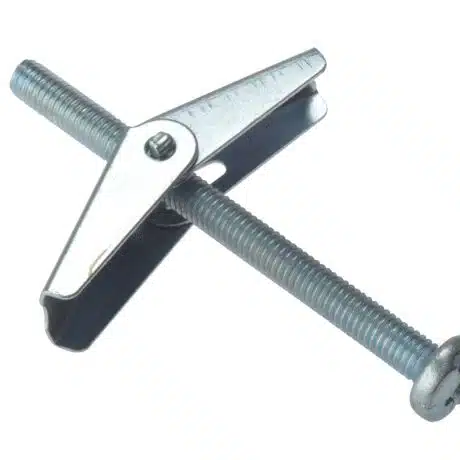
Spring Toggles Hollow Wall Plasterboard Fixings provide a strong, reliable way to fix into hollow walls and ceilings where there is a cavity behind the plasterboard. The spring-loaded toggle wings open up behind the board to form a wide load‑spreading anchor, ideal for securing shelves, brackets, radiators, light fittings and other medium‑to‑heavy loads to plasterboard, lath & plaster and hollow partitions.
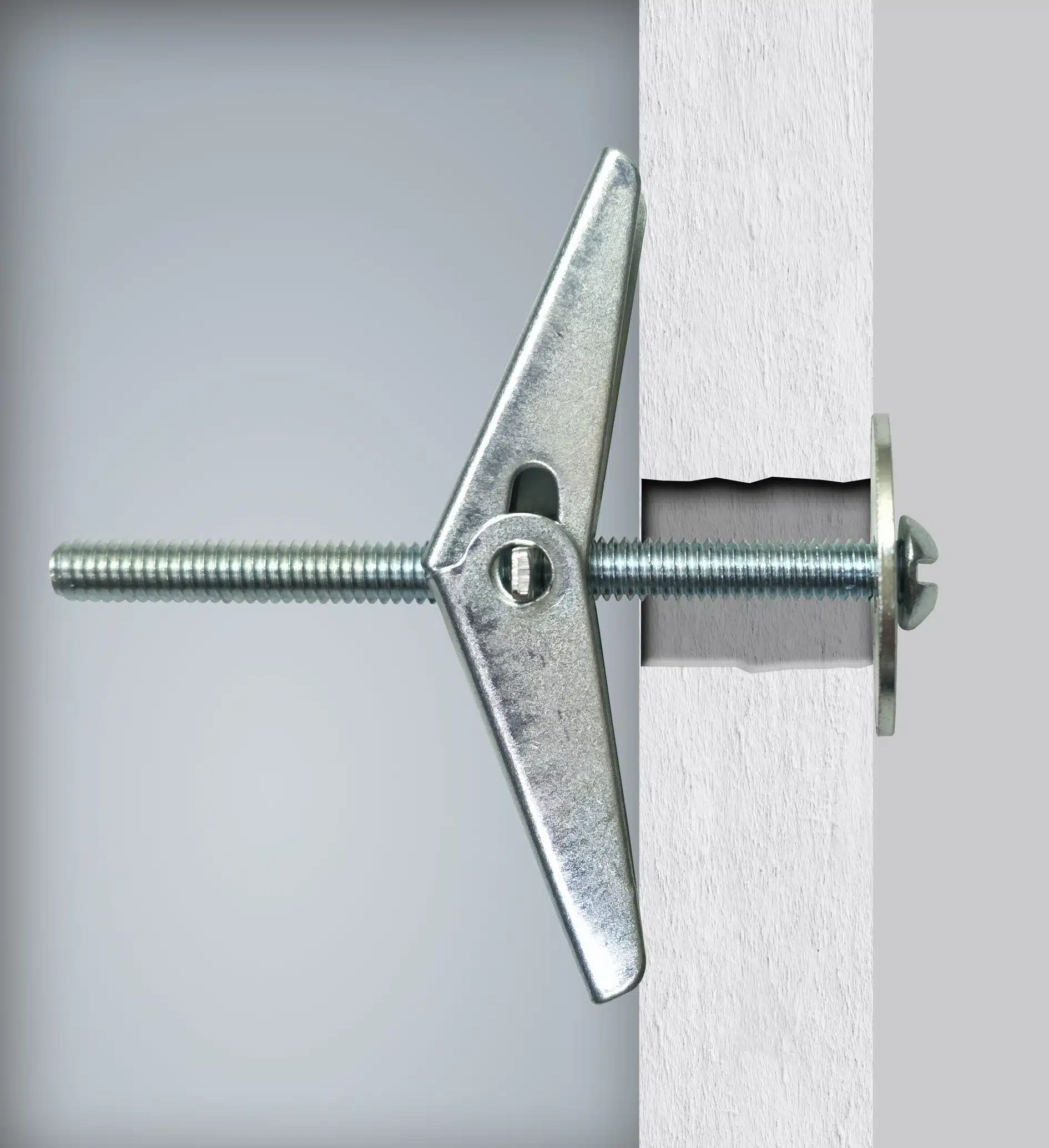
Spring Toggles Hollow Wall Plasterboard Fixings are classic cavity anchors used wherever you need a strong mechanical fixing into a hollow construction. Unlike plastic plugs, which rely on the compressive strength of the plasterboard alone, spring toggles use folding metal wings that pass through a pre‑drilled hole and then open out behind the board, creating a large bearing area across the rear surface.
This design gives significantly improved pull‑out resistance and load‑spreading compared to simple plugs or screws in plasterboard. When installed correctly and used within the recommended load values, spring toggles are suitable for many medium‑duty fixtures such as shelving brackets, light kitchen units, radiators, towel rails, curtain tracks and electrical fittings on hollow walls and ceilings.
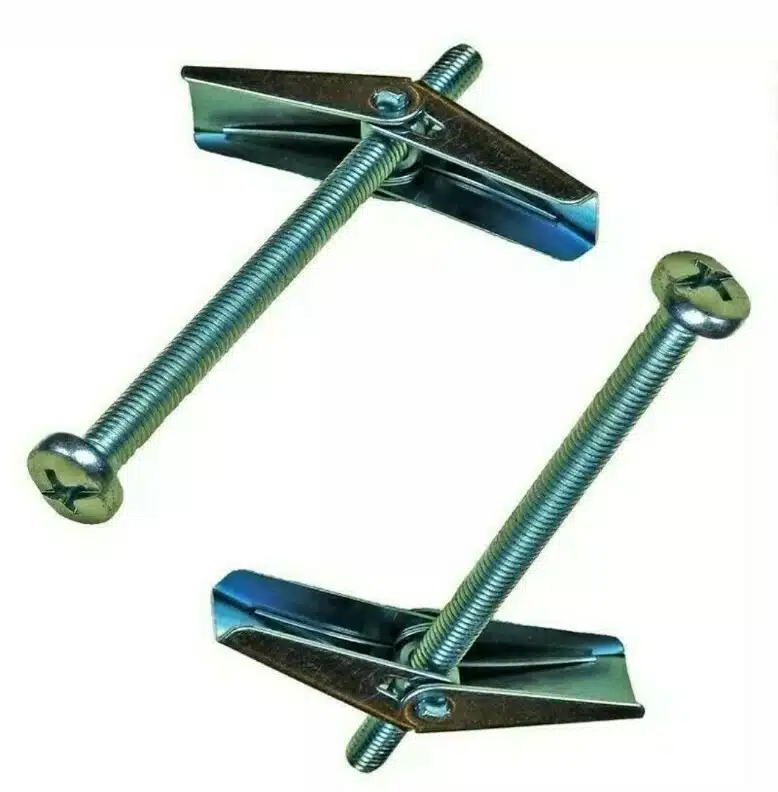
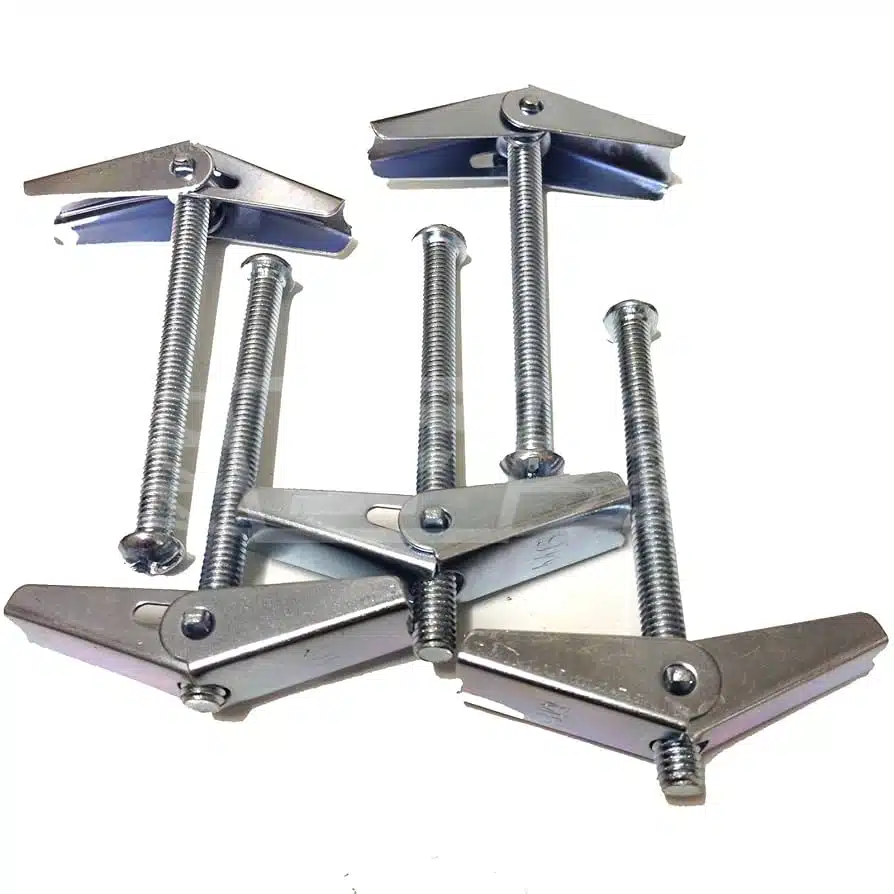
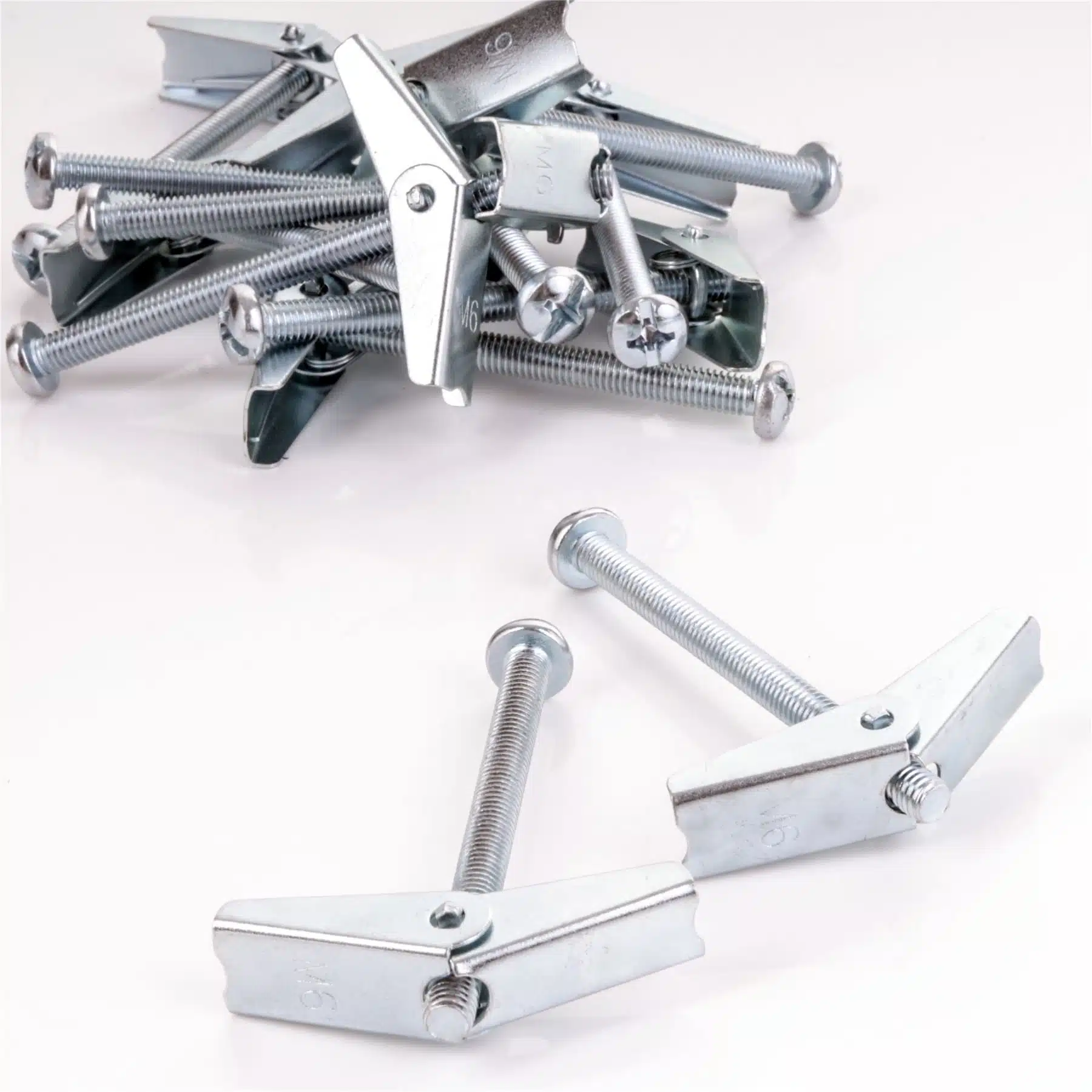
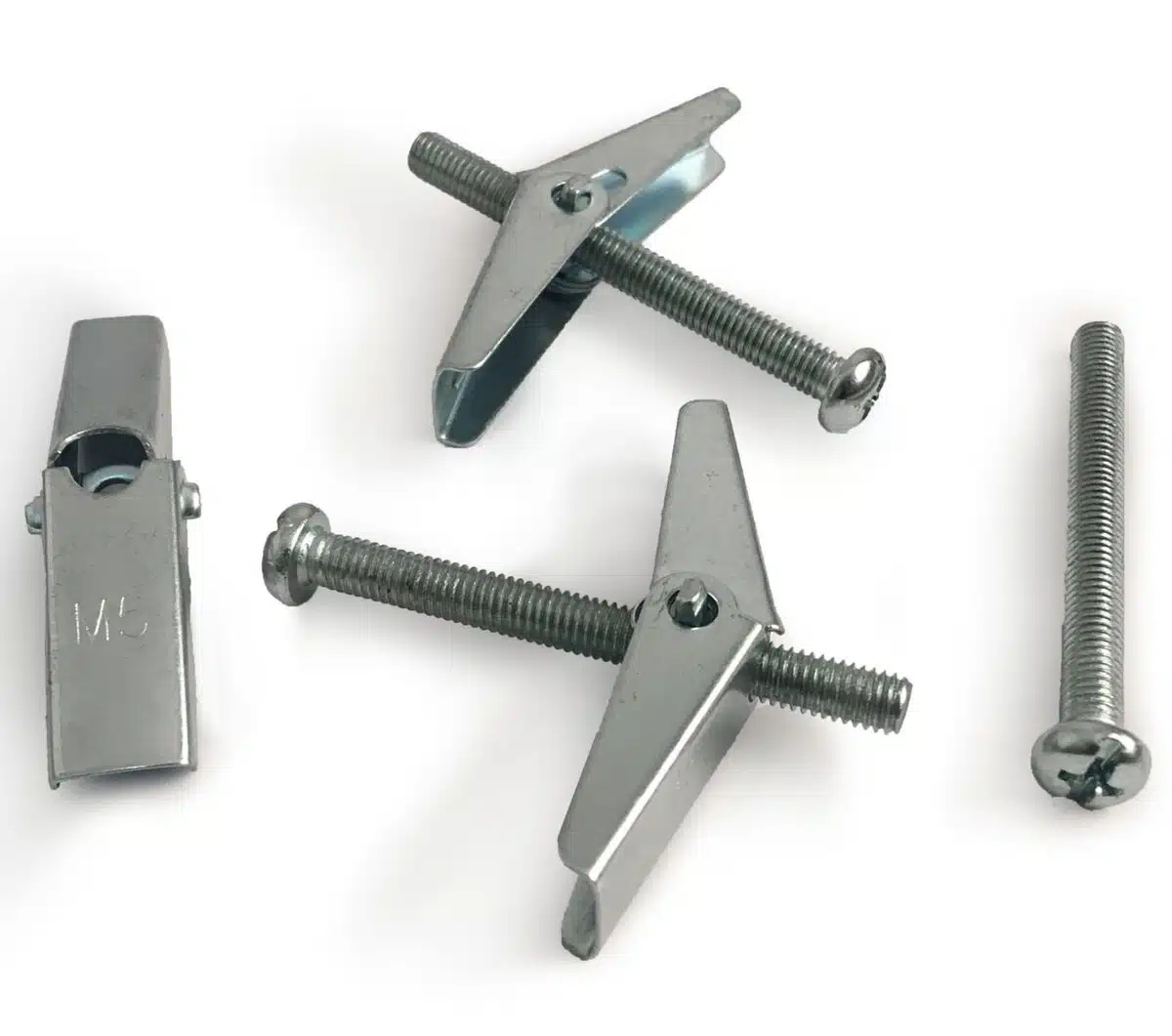
Each fixing typically consists of a machine screw or threaded stud and a pair of spring‑loaded metal wings. The wings fold along the screw for insertion, then automatically spring open behind the board once they pass through the hole. As you tighten the screw, the wings are pulled firmly against the rear face of the plasterboard, clamping the fixture securely.
Spring toggles are widely used by builders, kitchen and bedroom fitters, electricians, plumbers and DIYers who need reliable anchors in hollow structures. They are suitable for most standard plasterboard thicknesses (e.g. 9.5 mm, 12.5 mm) and other hollow materials within their grip range. For structural or safety‑critical loads (e.g. heavy wall‑hung cabinets, TVs or overhead loads), always refer to the manufacturer’s published load data, follow building regulations and, where necessary, consult a competent person or structural engineer.
Typical Use Cases
- Fixing shelving brackets and light to medium‑duty shelves into hollow plasterboard walls.
- Mounting radiators, towel rails and bathroom accessories to stud partitions (where loads and specs allow).
- Securing curtain rails, blinds and pelmets above windows in hollow reveals.
- Fixing light fittings, ceiling hooks and cable trays to hollow ceilings and suspended ceilings (within loading limits).
- Attaching small cupboards, mirror cabinets, notice boards and TV brackets where timber studs are not conveniently located (subject to load and manufacturer guidance).
Installation & Best Practice Tips
- Check substrate & load: Confirm you are fixing into plasterboard or another hollow construction, and that the expected load is within the manufacturer’s recommended safe working load (SWL). For heavy or safety‑critical items, consider fixing back to studs, noggins or solid masonry instead.
- Select the correct size: Choose a spring toggle size that suits:
- the plasterboard thickness,
- the required grip range (board + cavity), and
- the fixture thickness (bracket, rail, etc.).
- Mark and drill the hole: Mark fixing points accurately. Drill a clearance hole to the diameter specified for the toggle (larger than the screw diameter so the folded wings can pass through). Use a sharp wood/plasterboard bit or hole saw for a clean cut.
- Assemble the fixing: Thread the screw through the fixture (e.g. bracket), then screw on the folded toggle wings a few turns so they can still pivot and fold.
- Insert through the hole: Fold the wings along the screw and push them through the drilled hole until they pass fully behind the board. You’ll feel them spring open on the far side.
- Engage the wings: Gently pull back on the screw so the open wings sit flat against the rear of the board, then maintain light tension while you start tightening the screw.
- Tighten carefully: Using a screwdriver or driver bit, tighten the screw until the fixture is held firmly and the board is lightly compressed, but avoid overtightening which can crush the plasterboard.
- Final check: Confirm the fixture is solid with no movement. Repeat for all fixings, ensuring the load is shared across multiple toggles where required.
Always follow the specific installation instructions and load data provided by the spring toggle manufacturer. For overhead or safety‑critical installations, adhere strictly to building regulations and site method statements.
Spring Toggles Hollow Wall Plasterboard Fixings Features
- Spring‑loaded toggle wings – automatically open behind the board to create a wide load‑spreading anchor on the rear face.
- Machine screw / stud fixing – provides a strong, reusable thread for brackets, rails and fittings.
- Compatible with most hollow walls – suitable for plasterboard, lath & plaster, hollow concrete block and some panel systems within grip range.
- High pull‑out resistance – significantly stronger than basic plug & screw fixings in plain plasterboard, when correctly installed and loaded within manufacturer limits.
- Range of sizes – available in various screw diameters and wing sizes to suit different board thicknesses and load requirements.
- Zinc‑plated steel construction – corrosion‑resistant metal components for long‑term performance in internal environments.
- Trade‑quality manufacture – designed for professional installers requiring reliable hollow‑wall fixings.
Spring Toggles Hollow Wall Plasterboard Fixings Technical Information
- Fixing type: Spring toggle hollow wall anchor for plasterboard and cavities.
- Materials: Typically zinc‑plated steel wings and screw (check product for exact material and finish).
- Substrates: Plasterboard, lath & plaster, hollow blockwork, panel systems and other hollow constructions (within specified board thickness and cavity depth).
- Typical screw diameters: Commonly supplied in M4, M5, M6 and equivalent gauge machine screws (check variant).
- Required hole size: Larger than screw diameter – e.g. a 12 mm or 13 mm hole for many common toggles – refer to product packaging.
- Board thickness / grip range: Each toggle has a minimum and maximum board/cavity range; consult the manufacturer’s table for permitted board thickness and maximum clamping range.
- Recommended loads: Safe working loads (SWL) depend on board type, thickness, cavity depth and installation quality. Refer to the toggle manufacturer’s tested values and any relevant EN / ETA data where provided.
- Applications: Medium‑duty fixings in hollow walls and ceilings for brackets, rails, cupboards and services where solid fixing points are not available.
For safety‑critical fixings (e.g. heavy cabinets, TV brackets, overhead loads, grab rails), always consult the manufacturer’s technical data, follow BS / EN building standards where applicable and seek advice from a qualified person if in doubt.
Frequently Asked Questions – Spring Toggles Hollow Wall Plasterboard Fixings
1. How strong are spring toggles in plasterboard?
Spring toggles provide a much higher load capacity than standard plastic plugs in plasterboard because the wings spread the load across a larger area behind the board. Exact load values depend on board thickness, type, cavity depth and installation quality, so you must check the manufacturer’s published safe working loads. For heavier items, always use multiple fixings and, where possible, fix into studs or solid backgrounds.
2. Can I use spring toggles in ceilings?
Yes, but with care. Spring toggles can be used in hollow ceilings for light to moderate loads such as small light fittings or hooks, provided the load is within the manufacturer’s ceiling ratings. For heavier ceiling loads, or where failure would present a safety risk (e.g. large pendants, fan units, projectors), a more robust fixing strategy (such as fixing into joists, using additional bracing or specialist anchors) is strongly recommended.
3. What size hole do I need for spring toggles?
You must drill a hole large enough for the folded wings to pass through. This is usually significantly larger than the screw diameter. For example, an M5 or M6 spring toggle might require a 10–13 mm drill hole, depending on design. Always follow the hole size printed on the packaging or technical data sheet – using the wrong size can cause failure or make installation impossible.
4. Can I remove and reuse spring toggles?
Once installed, if you remove the screw completely, the wings will fall into the cavity and cannot be reused. However, you can usually remove and refit the screwed item without fully withdrawing the screw, as long as you keep a few threads engaged. If you need to remove the fixing completely, you will need a new toggle for reinstallation.
5. Are spring toggles better than self‑drill plasterboard fixings?
They serve different purposes. Self‑drill plasterboard fixings are quick and convenient for light to moderate loads, as they cut their own thread into the board. Spring toggles are generally better for higher loads and for thicker fixtures, as the wings anchor against the rear of the board, not just in the core. For heavy or safety‑critical items, toggles (or even more robust solutions) are usually preferred, but you should always check manufacturer load data and, if necessary, seek professional advice.
Spring Toggles Hollow Wall Plasterboard Fixings Common Uses / How to Use
Common Uses
- Hanging shelves and small cupboards on plasterboard partition walls.
- Fixing radiators, towel rails, mirrors and cabinets where studs aren’t conveniently positioned.
- Mounting curtain rails, blinds and pelmets across window reveals in hollow walls.
- Securing ceiling hooks, light fittings and cable trays in hollow or suspended ceilings (within load limits).
- General refurbishment work where solid fixing points are limited and hollow cavity fixings are required.
How to Use – Step‑by‑Step Summary
- Plan & mark: Mark fixing positions, ensuring they are clear of services (use a stud/pipe/ cable detector where possible).
- Drill the hole: Drill a hole to the specified diameter for the toggle, square to the surface.
- Assemble fixing: Place the screw through your bracket or fixture, then thread on the toggle wings a few turns.
- Insert toggle: Fold the wings and push them through the hole until they spring open behind the board.
- Seat the wings: Pull gently on the screw to bring the wings flat against the back of the board.
- Tighten: While maintaining light tension, tighten the screw until the fixture is securely clamped to the wall.
- Check: Confirm all fixings are solid and that the item is supported by a sufficient number of toggles for the load.
| Size | M5 x 50mm (100), M5 x 75mm (50), M5 x 100mm (50), M6 x 75mm (50) |
|---|
Shipping Policy
 At Always First 4 Fixings, we know that your projects rely on fast, dependable delivery. That’s why we offer flexible UK shipping options designed for tradespeople and businesses:
Fast Dispatch: Orders are processed and dispatched within 24 hours on working days.
Free shipping on all orders over £60 (UK mainland).
Express options available to keep your jobs moving.
Click & Collect: Order online and pick up at your convenience (if applicable).
Reliable Couriers: We use trusted UK carriers to ensure your fixings and fasteners arrive on time.
You’ll receive tracking details as soon as your order leaves our warehouse. Delivery times may vary depending on location and availability, but we work hard to get your order to you as quickly as possible.
At Always First 4 Fixings, we know that your projects rely on fast, dependable delivery. That’s why we offer flexible UK shipping options designed for tradespeople and businesses:
Fast Dispatch: Orders are processed and dispatched within 24 hours on working days.
Free shipping on all orders over £60 (UK mainland).
Express options available to keep your jobs moving.
Click & Collect: Order online and pick up at your convenience (if applicable).
Reliable Couriers: We use trusted UK carriers to ensure your fixings and fasteners arrive on time.
You’ll receive tracking details as soon as your order leaves our warehouse. Delivery times may vary depending on location and availability, but we work hard to get your order to you as quickly as possible.
Returns Policy
We want you to be fully confident when ordering from Always First 4 Fixings. If your supplies aren’t right for any reason, we make returns straightforward: Return unused and undamaged items in original packaging within 30 days. Don’t forget your proof of purchase or order confirmation. Once we receive your return, we’ll process your refund or exchange promptly. Certain items may have specific exclusions or conditions—please read our detailed returns policy or contact us if you have questions. Our team is always here to help ensure you get exactly what you need for the job.Related products
-

Delta Multi-Purpose Woodscrews | Trade-Grade General Purpose Wood Screws
£1.61 £13.94Price range: £1.34£1.61 through £11.62£13.94 Excl. VATIncl. VAT -
Timberfix Twinthread Wood Screws | General-Purpose Countersunk Woodscrews
£0.67 £6.22Price range: £0.56£0.67 through £5.18£6.22 Excl. VATIncl. VAT -
Unifix Twinthread Wood Screws | General-Purpose Countersunk Woodscrews
£0.67 £6.37Price range: £0.56£0.67 through £5.31£6.37 Excl. VATIncl. VAT -
30mm Flat Plastic Packers | Compact Levelling & Packing Shims
£3.02 £30Price range: £2.52£3.02 through £25£30 Excl. VATIncl. VAT -
28mm Flat Plastic Packers | Compact Levelling & Packing Shims for Glazing & Joinery
£2.70 £27.41Price range: £2.25£2.70 through £22.84£27.41 Excl. VATIncl. VAT