

Galvanised Stretcher Plates | Flat Galvanised Connector Plates for Timber & Masonry
- Strong steel plate – provides reliable reinforcement and connection for timber and masonry.
- Galvanised finish – zinc coating offers corrosion resistance for internal and many external applications.
- Pre‑punched holes – speeds installation and ensures consistent fixing patterns.
- Multi‑purpose use – suitable for repairs, splices, restraints and general bracketry.
- Easy to fit – can be fixed with nails or screws using standard tools.
Free shipping on orders over £60
- No-Risk Money Back Guarantee!
- No Hassle Refunds
- Secure Payments
Galvanised Stretcher Plates
Galvanised Stretcher Plates are versatile flat steel plates used for tying, restraining and
strengthening timber and masonry constructions. With a corrosion‑resistant galvanised finish
and pre‑punched fixing holes, these stretcher plates are ideal for framing repairs, reinforcement,
and general connection of structural or non‑structural elements on site.
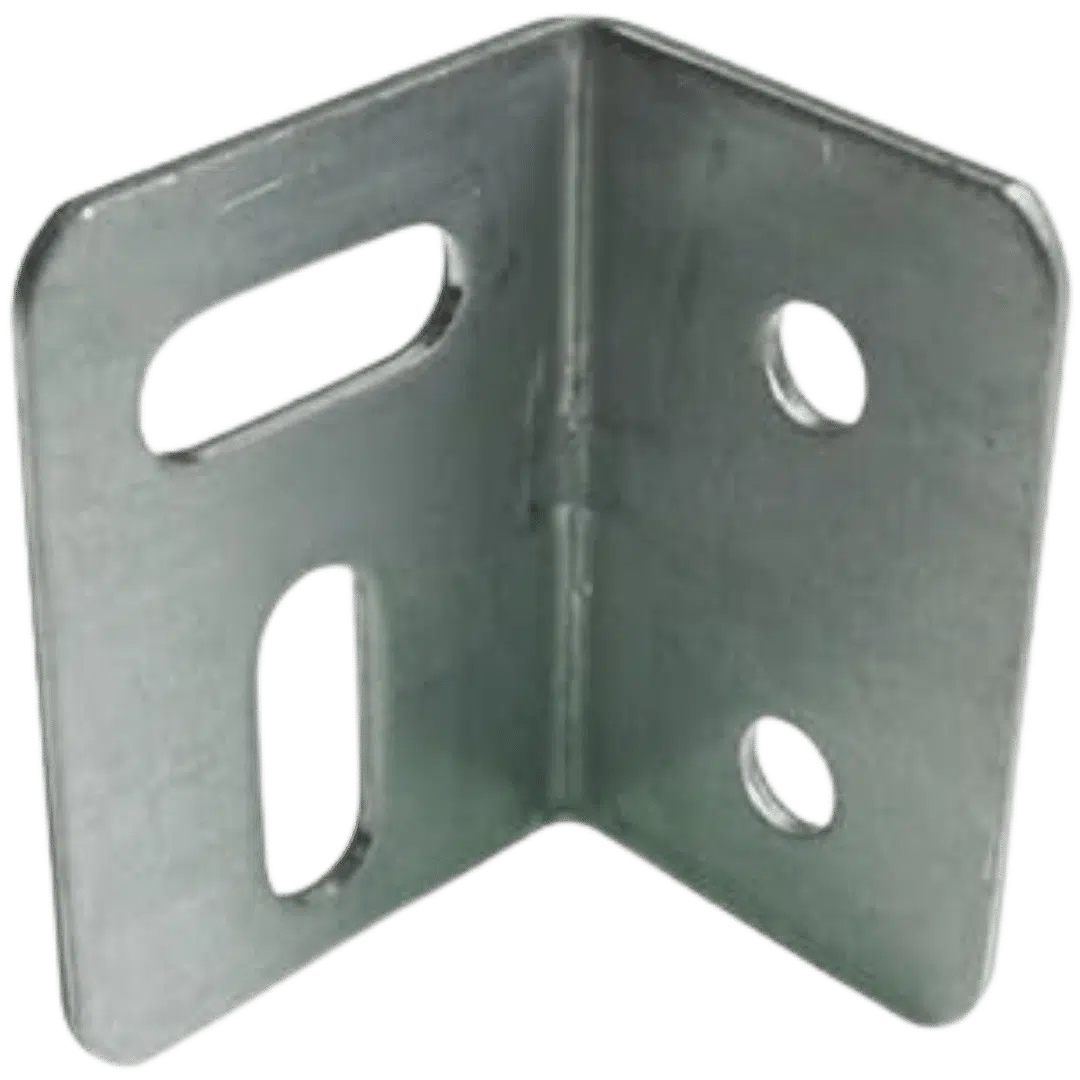
Galvanised Stretcher Plates are flat, rectangular steel plates designed to join and reinforce
construction elements where a simple, low‑profile fixing is required. Commonly used across
timber framing, roofing, studwork and light masonry applications, they provide additional
strength and restraint without the need for bulky brackets.
Manufactured from mild steel with a hot‑dip or electro‑galvanised finish (depending on
specification), these plates offer good corrosion resistance for internal use and many
sheltered external environments. Pre‑punched holes in standard patterns make it easy to
install the plates quickly and consistently using nails or screws appropriate to the substrate.
Galvanised Stretcher Plates are widely used by builders, roofers, carpenters and maintenance
teams for repairs, alterations, new build framing and general construction tasks.
Typical Use Cases
- Reinforcing and splicing timber joists, rafters and studs.
- Tying partition walls or studwork to adjacent structures.
- Strengthening corners, junctions and repairs in timber framing.
- Fixing and restraining timber plates or battens to masonry (with suitable fixings).
- General light‑duty brackets for DIY and maintenance projects.
Installation & Usage Tips
- Choose correct fixings: Use appropriate galvanised nails or screws to match the plate and substrate.
- Use enough fixings: Fill the recommended number of holes on each side of the joint for effective load transfer.
- Position centrally: Align the plate over the joint or area to be reinforced and ensure full contact with the surface.
- Avoid over‑bending: Stretcher plates are designed as flat connectors; do not kink or sharply bend unless the product is specified as bendable.
- Protect cut edges: If plates are cut to length, treat exposed edges with a suitable zinc‑rich or corrosion‑resistant coating.
Technical Information (Typical)
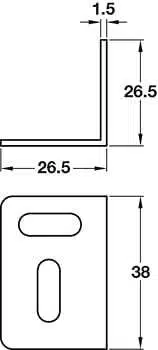
Exact dimensions and specification vary by product; always check the packaging or data sheet for
the Galvanised Stretcher Plates you are using. Typical characteristics include:
- Type: Flat galvanised steel connector plate.
- Material: Mild steel.
- Finish: Galvanised (zinc‑coated) for corrosion resistance.
- Dimensions: Available in various lengths, widths and thicknesses (e.g. common lengths from ~100–400mm – confirm actual size).
- Holes: Pre‑punched nail/screw holes in standard patterns (hole diameter and spacing per manufacturer).
- Applications: Light to medium‑duty connection and reinforcement of timber and light masonry (with appropriate fixings).
- Standards: Some products may be tested/approved to relevant structural connector standards – check technical literature where applicable.
For detailed load capacities, fixing requirements and dimensional drawings, refer to the
manufacturer’s technical documentation for the specific Galvanised Stretcher Plates supplied.
Key Features
- Flat, low‑profile connector – ideal where a discrete reinforcement is required.
- Galvanised corrosion protection – suitable for typical indoor and sheltered outdoor use.
- Pre‑punched fixing holes – quick and easy to install using standard nails or screws.
- Versatile application – suitable for repairs, new build, DIY and maintenance.
- Available in multiple sizes – select plate size to suit the joint or member being reinforced.
Frequently Asked Questions (FAQs)
1. What are Galvanised Stretcher Plates used for?
They are used to join and reinforce structural or non‑structural elements such as timber
joists, rafters, studs and plates, and to provide restraint or additional strength at joints,
repairs and junctions.
2. Can I use stretcher plates outside?
The galvanised coating provides a degree of corrosion resistance suitable for internal and many
sheltered external applications. For highly exposed or aggressive environments, consider
stainless steel or heavily galvanised connectors and fixings, and always follow manufacturer
guidance.
3. What fixings should I use with Galvanised Stretcher Plates?
Use compatible galvanised or coated nails/screws sized to suit the plate holes and the timber
or substrate. For structural applications, follow the manufacturer’s recommendations for nail
type, size and number of fixings per hole pattern.
4. Can I cut stretcher plates to length?
Plates can usually be cut with suitable metal‑cutting tools. Any cut edges should be deburred
and treated with a zinc‑rich or suitable corrosion‑protective coating to maintain protection.
Cutting may affect any formal approvals, so check technical guidance for structural use.
5. Are stretcher plates load‑rated for structural use?
Some stretcher plates may have published load data and approvals; others are intended for
general/light‑duty use only. For structural or safety‑critical applications, always consult
the manufacturer’s technical data and, where necessary, a structural engineer.
Common Uses / How to Use
To get the best from Galvanised Stretcher Plates:
- Measure and select the correct plate size for the joint or area to be reinforced.
- Position the plate centrally over the joint on a clean, flat surface.
- Fix the plate using the recommended galvanised nails or screws, filling the required holes on each side.
- For heavier duty applications, consider using plates on both sides of the joint where appropriate.
- Inspect the connection to ensure all fixings are properly driven and the plate is fully seated.
| Quantity | Pack 25, Pack 50, Pack 100 |
|---|
Shipping Policy
 At Always First 4 Fixings, we know that your projects rely on fast, dependable delivery. That’s why we offer flexible UK shipping options designed for tradespeople and businesses:
Fast Dispatch: Orders are processed and dispatched within 24 hours on working days.
Free shipping on all orders over £60 (UK mainland).
Express options available to keep your jobs moving.
Click & Collect: Order online and pick up at your convenience (if applicable).
Reliable Couriers: We use trusted UK carriers to ensure your fixings and fasteners arrive on time.
You’ll receive tracking details as soon as your order leaves our warehouse. Delivery times may vary depending on location and availability, but we work hard to get your order to you as quickly as possible.
At Always First 4 Fixings, we know that your projects rely on fast, dependable delivery. That’s why we offer flexible UK shipping options designed for tradespeople and businesses:
Fast Dispatch: Orders are processed and dispatched within 24 hours on working days.
Free shipping on all orders over £60 (UK mainland).
Express options available to keep your jobs moving.
Click & Collect: Order online and pick up at your convenience (if applicable).
Reliable Couriers: We use trusted UK carriers to ensure your fixings and fasteners arrive on time.
You’ll receive tracking details as soon as your order leaves our warehouse. Delivery times may vary depending on location and availability, but we work hard to get your order to you as quickly as possible.
Returns Policy
We want you to be fully confident when ordering from Always First 4 Fixings. If your supplies aren’t right for any reason, we make returns straightforward: Return unused and undamaged items in original packaging within 30 days. Don’t forget your proof of purchase or order confirmation. Once we receive your return, we’ll process your refund or exchange promptly. Certain items may have specific exclusions or conditions—please read our detailed returns policy or contact us if you have questions. Our team is always here to help ensure you get exactly what you need for the job.Related products
-

White Torx T30 Caps | Decorative Cover Caps for T30 Torx Screw Heads
£2.49£2.99 Excl. VATIncl. VAT -

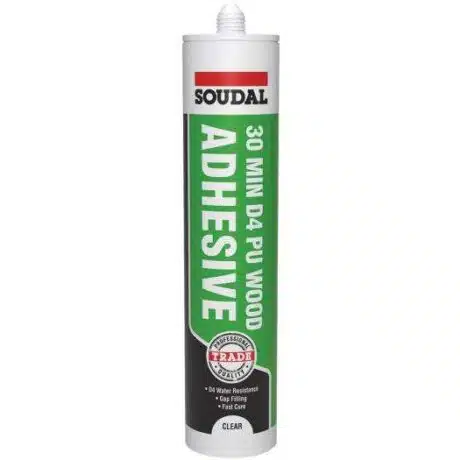
Soudal D4 PU Wood Glue | High-Strength Waterproof Polyurethane Timber Adhesive (EN 204 D4)
£6.24 £9.36Price range: £5.20£6.24 through £7.80£9.36 Excl. VATIncl. VAT -
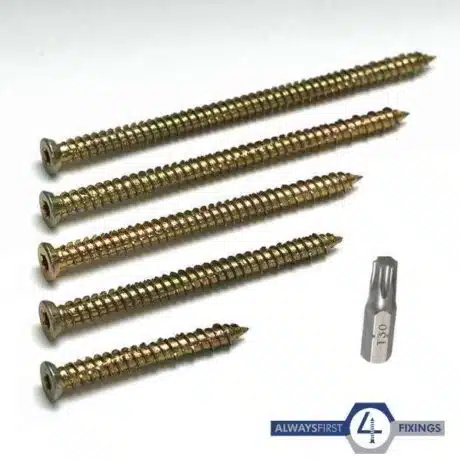
Concrete Masonry Screws with Free T30 Bit | Self-Tapping Plugless Anchors for Concrete & Brick
£4.84 £19Price range: £4.03£4.84 through £15.83£19 Excl. VATIncl. VAT -
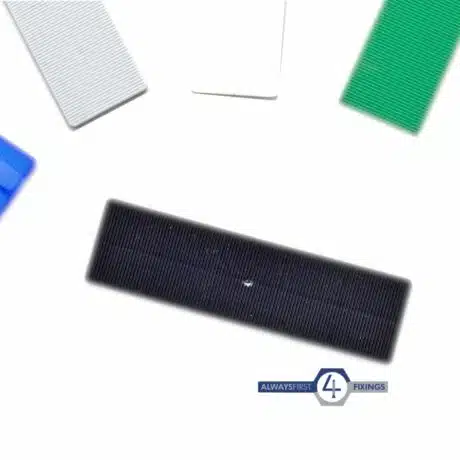
30mm Flat Plastic Packers | Compact Levelling & Packing Shims
£3.02 £30Price range: £2.52£3.02 through £25£30 Excl. VATIncl. VAT -
Delta Multi-Purpose Woodscrews | Trade-Grade General Purpose Wood Screws
£1.61 £13.94Price range: £1.34£1.61 through £11.62£13.94 Excl. VATIncl. VAT